Skiing in Cortina d’Ampezzo
Ski touring is much more than a simple sport: it’s adventure, it’s exploration, it’s the silence of the mountain, the fatigue that becomes freedom, the intact snow under the skis and unparalleled views.
With its extensive network of routes, Cortina d’Ampezzo offers ski mountaineering enthusiasts the opportunity to explore the Dolomites in all their grandeur and beauty.
Here, you can discover spectacular itineraries winding through silent valleys, snowy forests, and pristine slopes, experiencing the mountains in their most authentic form — far from crowds and groomed pistes . From more challenging routes for experienced skiers to gentler ascents for beginners, the Queen of the Dolomites offers options for every level, combining sport, adventure, and nature in perfect balance.
Cortina’s connection with ski mountaineering runs deep. Each year, the destination hosts events and competitions dedicated to the discipline, such as the Cortina SkiMo Cup, attracting athletes and enthusiasts from around the world.
Ski mountaineering is also gaining increasing global recognition, and from 2026 it officially becomes an Olympic discipline, further highlighting the growing appeal of this extraordinary mountain experience.
Ski touring in Cortina is pure freedom, the pleasure of ascending snowy slopes away from the crowds, listening to the silence of the mountains and enjoying the unique views of the Dolomites.
It means discovering the most intimate side of the mountain, experiencing snow in its wildest state, savoring the satisfaction of every ascent and the magic of every descent on fresh, pristine snow. With routes for every level and the possibility of being accompanied by expert mountain guides, Cortina offers ski mountaineers an unforgettable experience of sport, exploration and deep contact with nature.
Ski touring in Cortina
The beauty of going up on a different kind of ski, mountaineering skis, to get off the beaten track and see the World Heritage Dolomites in all their beauty.
With its vast network of trails, Cortina makes it possible to explore the pristine beauty of the Dolomites through incredible scenery, climb slopes and reach the highest peaks. And then take “the skins” off your skis and descend down snow-white slopes, following trails suggested by the mountain itself, raising small clouds of powdery snow, always preferring safety.
Sometimes conditions allow ski touring up some huts in the evening, avoiding the slopes but making your way down thanks to the moonlight and headlamps. There, waiting for you, the typically alpine atmosphere, with the authentic flavors of typical cuisine and high altitude rooms with a privileged view of the Dolomites.
USEFUL INFORMATION:
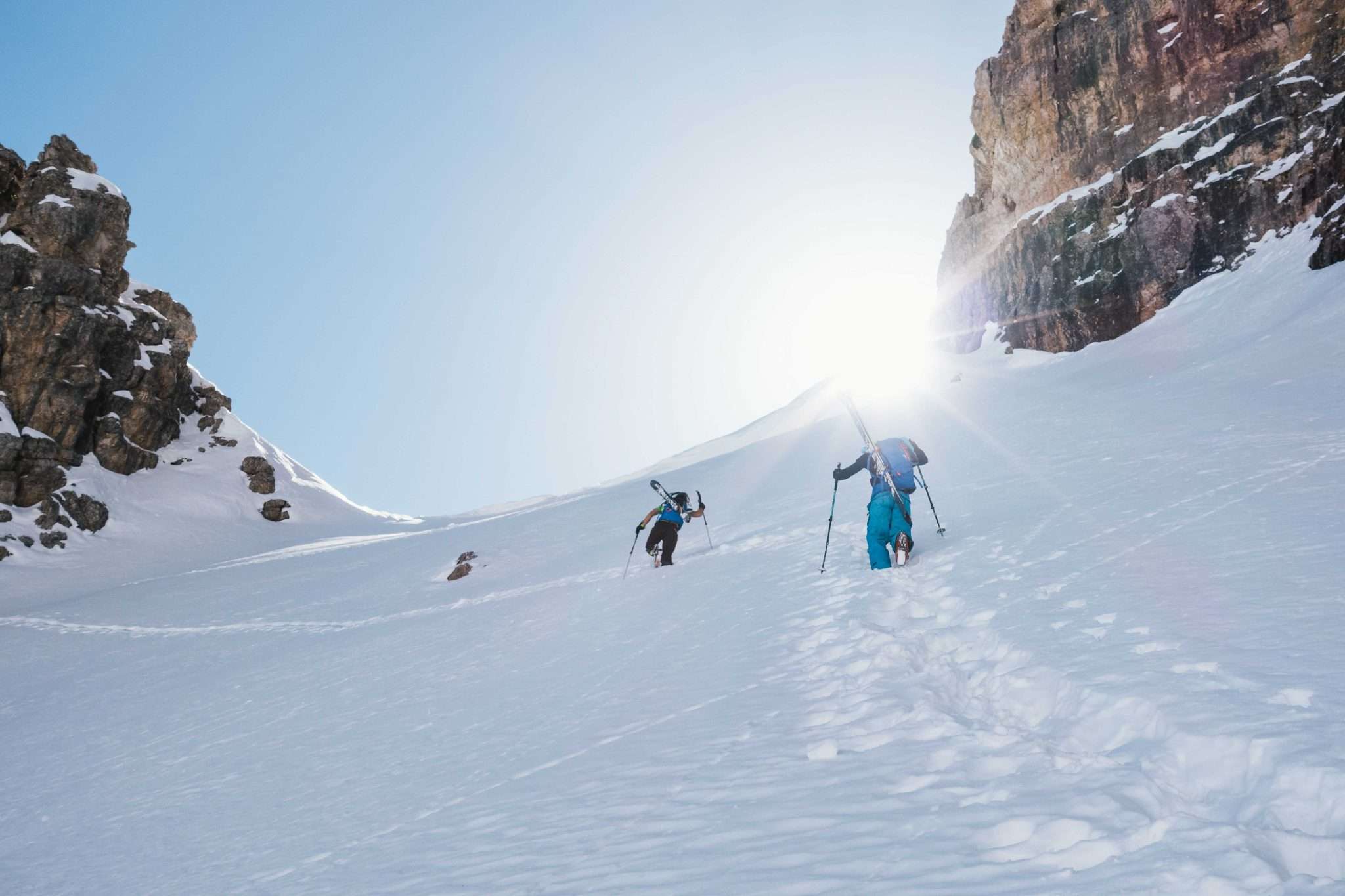
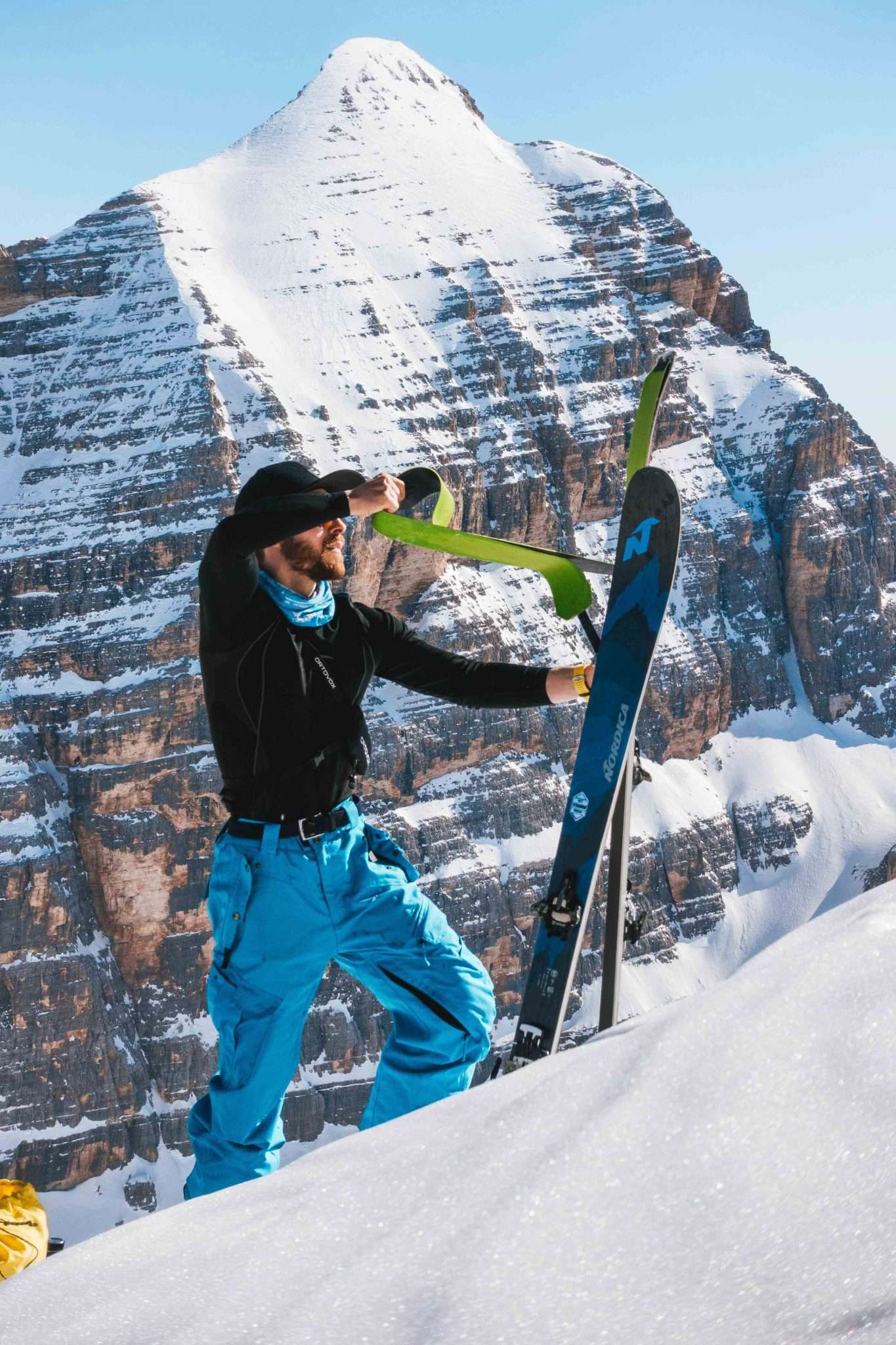
Ski touring is a discipline that combines mountain hiking and off-piste skiing. One ascends snowy routes using lightweight skis with sealskins, which allow one to proceed uphill without slipping. The boots are softer and lighter than alpine skiing: during the ascent, the heel remains free (not hooked to the ski) to allow for a fluid movement similar to walking. Upon reaching the summit, the skins are removed and the boot is attached to the ski by switching to downhill mode. They are stiffer in this configuration, offering stability and support to cope with skiing.
Ski touring allows you to experience the mountains in an authentic and immersive way, surrounded by nature. However, it requires good physical preparation, knowledge of winter mountain safety, and the appropriate equipment.
The ideal clothing follows the layering principle: base layer, insulating layer, and outer layer. This system allows you to easily adapt to the temperature changes typical of the alpine environment. Mountain weather can shift quickly — wind, intense cold, strong sun, or sudden snowfall. Dressing in layers helps regulate body temperature and stay dry, preventing excessive sweating or chilling.
The base layer, worn next to the skin, should be thermal, breathable, and capable of keeping the skin dry even during the ascent. The best materials for these features are merino wool or technical synthetic fabrics.
The mid layer should retain warmth while remaining lightweight and packable. Good options include technical fleece or synthetic or insulated jackets designed for outdoor activities.
The outer layer, which protects against snow, wind, and harsh weather during exposed sections and the descent, should be waterproof, windproof, and breathable. For pants, it is recommended to choose waterproof or water-repellent, windproof, durable, and comfortable models suitable for walking with climbing skins. Many designs include side ventilation zippers, which are particularly useful during the ascent. Gloves, a neck warmer, and a hat or headband are essential to stay warm.
As for gloves, it is advisable to bring two pairs: a lighter, breathable pair for the ascent and a warmer, waterproof pair for the descent or in case of adverse weather conditions. Having two options keeps hands dry and protected at all times.
Finally, it is important to protect your eyes from snow glare and UV rays. Sunglasses are ideal for the ascent and stable weather conditions, while ski goggles are recommended in wind, snowfall, or changing visibility.
For a ski touring outing, it is important to choose specific equipment suited to the terrain and conditions. Ski touring skis should be lightweight for the ascent and stable for the descent, paired with poles, dedicated bindings, and compatible boots. Climbing skins must provide good grip uphill and smooth glide; keeping them clean and dry is essential for effective use.
The ideal backpack has a capacity between 20 and 30 liters, spacious enough to carry safety equipment, extra layers, water, and snacks, while remaining light and comfortable for movement. It is best to choose models with ski-carry systems and easily accessible pockets.
For more experienced skiers, depending on the route and snow and weather conditions, additional equipment such as crampons, ski crampons, and an ice axe may also be required.
Your ski touring backpack should include: water or warm tea, snacks, gloves for the descent, a hat or headband for the descent, a spare thermal base layer, avalanche safety equipment (transceiver, shovel, and probe), sunglasses, and sunscreen for clear days.
Absolutely yes. For any ski touring outing — even on the most popular routes — it is essential to carry avalanche safety equipment (transceiver, shovel, and probe) and know how to use it properly.
Snow conditions in the Dolomites can change rapidly, and the presence of slopes exposed to avalanches requires maximum caution. Before setting out, it is recommended to check the avalanche bulletin, assess the route according to your level of experience, and, if necessary, rely on qualified mountain guides who know the terrain and can manage safety in snowy environments.
It is not mandatory, but is strongly recommended during the descent. The helmet protects against falls, ice, branches or small landslides.
Traditionally, ski touring was mainly a spring activity, when snow conditions became more stable and firn snow formed — a surface softened by the sun that creates ideal skiing conditions: smooth, consistent, and enjoyable without being heavy or too soft. Over time, improvements in equipment and the growing popularity of the discipline have expanded the possibilities. Today, ski touring is practiced throughout the winter season, generally from December to April or May, choosing routes according to seasonal conditions.
In many locations, evening ski touring has also become popular, thanks to mountain huts that remain open and accessible via dedicated routes. Sometimes, evening events or amateur races are organized, allowing descents on groomed slopes illuminated by moonlight. In these cases, a headlamp is essential.
In any case, before setting out, it is crucial to check the avalanche bulletin, weather forecast, and snow conditions. Conditions can change quickly, and safety must always remain the top priority.
Equipment can be rented from one of the rentals in Cortina d’Ampezzo. Here you will find equipment suitable for every level and knowledgeable staff.
It depends on your fitness level, your experience on snow, and the type of route you wish to take. Ski touring requires good training, ability to handle even long climbs, confidence in off-piste skiing and familiarity with the use of equipment.
If you are a beginner, you can still try this beautiful sport, but it is recommended to choose easy-level tours (for example on groomed routes or with descent on piste) and rely on qualified mountain guides, who can suggest the most suitable itinerary and teach you the fundamental techniques.
In any case, it is important not to underestimate weather conditions and avalanche risk, to plan the excursion carefully, and to ensure you carry complete safety equipment.
Alpine skiing snowboard
In Cortina d'AmpezzoCross-country skiing
Cortina d'AmpezzoBecome part of the magic of Cortina. Sign up for our newsletter today!
The adventure don’t end here. Do you follow us?
Become part of the magic of Cortina. Sign up for our newsletter today!
The adventure don’t end here. Do you follow us?