
Between Alpine Meadows, Nature, and Traditions
Alpine Meadows, Traditions, and Pastures in the Dolomites of Cortina
Explore the beauty of Cortina d’Ampezzo and its traditional mountain huts by returning to its origins: ancient traditions, open pastures, and unspoiled nature at the foot of the Dolomites.
Looking at old black-and-white photographs, one is struck by the vastness of the pastures that once shaped the landscape of Cortina. In those images, grazing lands were so extensive that forests appeared almost secondary within the scenery.
Over time, the needs of families and the activities of the valley changed, gradually giving way to tourism and reducing the presence of shepherds. Today, the forest has once again become a dominant feature — a majestic presence slowly reclaiming space.
Yet the malghe continue to attract visitors in search of peace, fresh mountain air, and authentic flavors. The barns and traditional brite are slowly returning to the center of interest for those who wish to rediscover the simplicity of mountain life.
Genuine aromas, rediscovered traditions, and slower rhythms: the mountains still offer the opportunity to reconnect with what truly matters.
Explore the beauty of Cortina d’Ampezzo and its traditional mountain huts by returning to its origins: ancient traditions, open pastures, and unspoiled nature at the foot of the Dolomites.
Looking at old black-and-white photographs, one is struck by the vastness of the pastures that once shaped the landscape of Cortina. In those images, grazing lands were so extensive that forests appeared almost secondary within the scenary.
Over time, the needs of families and the activities of the valley changed, gradually giving way to tourism and reducing the presence of shepherds. Today, the forest has once again become a dominant feature — a majestic presence slowly reclaiming space.
Yet the malghe continue to attract visitors in search of peace, fresh mountain air, and authentic flavors. The barns and traditional brite are slowly returning to the center of interest for those who wish to rediscover the simplicity of mountain life.
Genuine aromas, rediscovered traditions, and slower rhythms: the mountains still offer the opportunity to reconnect with what truly matters.
Malga Ra Stua, Malga Federa, Malga Larieto, and Malga Pezié de Parù are the four active alpine huts in Cortina. The first two are located on high mountain pastures, while the others are set in lower alpine meadows.
Around 400 cattle — including calves and heifers — graze in these alpine pastures, along with about 700 sheep and several dozen horses and goats. Most of the livestock comes from nearby regions such as Val Pusteria, Alta Badia, and Livinallongo.
There are only a few local farmers in Cortina, but their products are highly appreciated. The quality and richness of high-altitude milk can be tasted in the traditional dishes served throughout the area — from simple recipes to more refined creations. The traditional cuisine offered in the mountain huts is rooted in the authentic ingredients provided by alpine pastures and the unique environment of the Dolomites of Cortina, where simplicity and quality come together to create truly memorable flavors.
Malghe are traditional alpine huts, typically located between 1,200 and 2,100 meters above sea level, designed to host livestock during the summer months, generally from June to September. These structures include living quarters for farmers, large barns, and dedicated spaces for milk processing and dairy production.
Usually set near mountain streams and surrounded by wide alpine meadows, malghe provide the ideal environment for animals to graze freely in pristine natural surroundings.
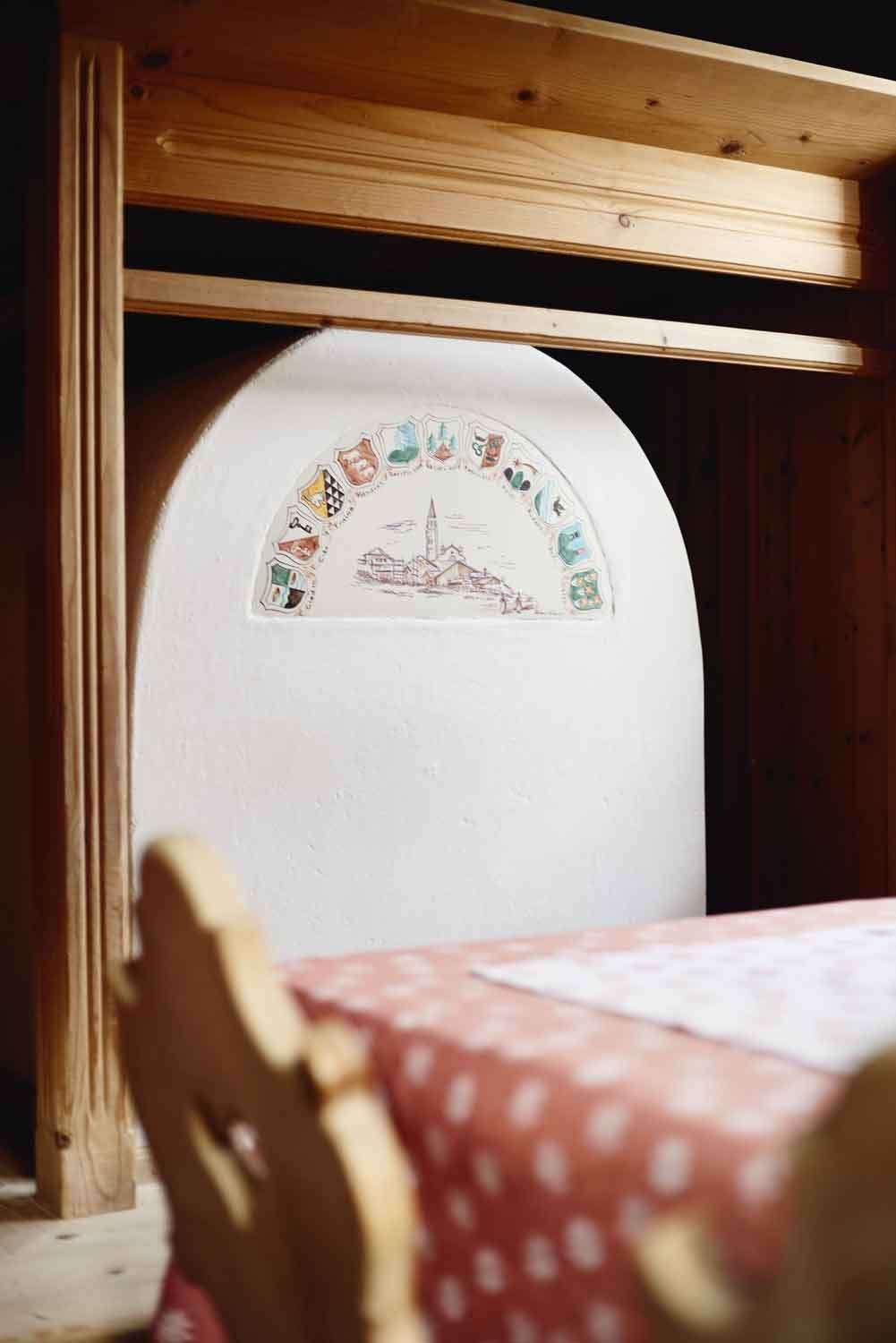
Malghe are a fundamental part of Alpine and Dolomite traditions.
For generations, pastoral life provided sustenance for local families and helped shape important social institutions such as the Regole d’Ampezzo, an ancient system created to protect the shared land and heritage of Cortina.
The development of a pastoral economy also led to the creation of specialized knowledge and refined craftsmanship. This wisdom was both practical and scientific — based on observation, experience, and sustainability — and essential for the survival of mountain communities. Over time, this knowledge evolved into a form of art: in architecture, in the shaping of alpine pastures, and in beautifully crafted tools.
From this way of life emerged a true mountain culture, rich in traditions, values, myths, and legends. A heritage preserved over centuries that today highlights the importance of a slower, more sustainable relationship with nature — beneficial both for people and for the environment.
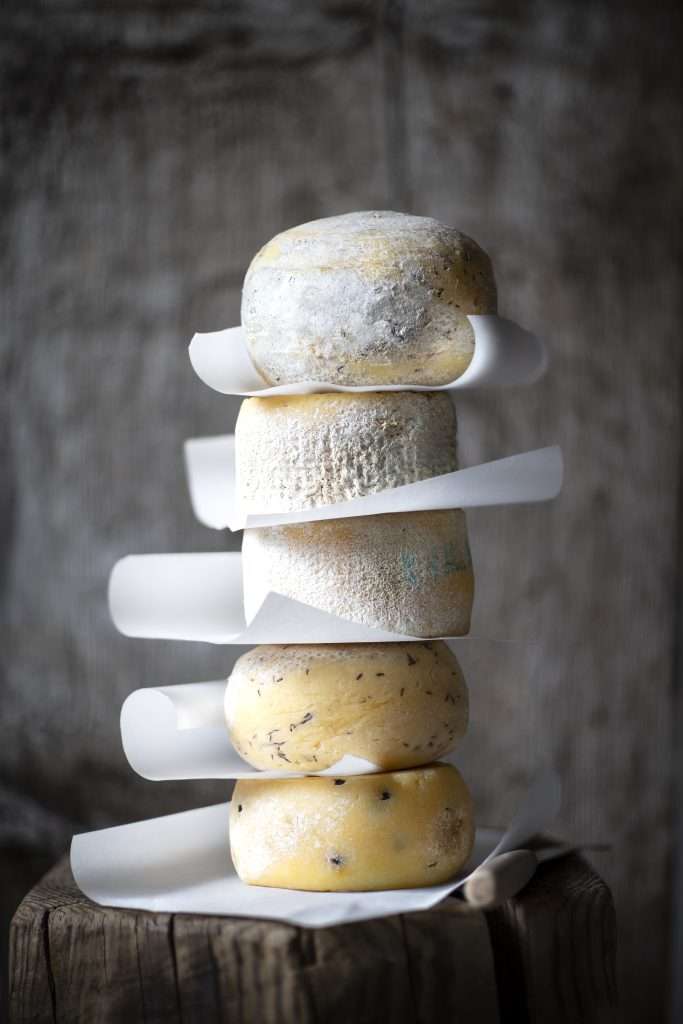
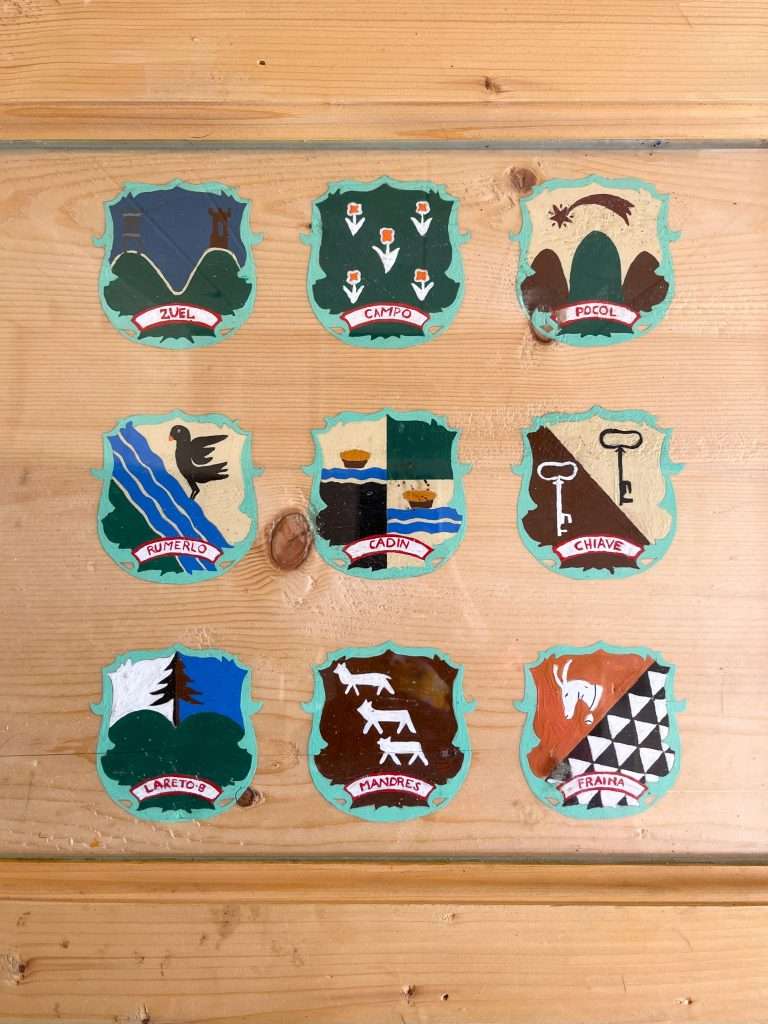
Can you visit alpine barns in Cortina? Yes — and it’s a truly special experience.
At El Brite de Larieto, you can visit a beautiful working barn where experiences such as dairy-making workshops and tastings are organized. Here, artisanal cheeses are produced and can be purchased at Piccolo Brite, as well as enjoyed in the menus of both the Brite restaurant and the Michelin-starred SanBrite, led by chef Riccardo Gaspari and Maître Ludovica Rubbini.
In 2024, a new barn also opened in the Ronche area of Cortina. Managed under the protection of the Regole d’Ampezzo and entrusted to the Valbona company — including Claudio Pompanin, Davide Santer, Francesco Degasper, and Giorgio Degasper — this new structure hosts 25 cows.
Their milk is processed directly on site to produce cheese, offering visitors another authentic experience to discover.
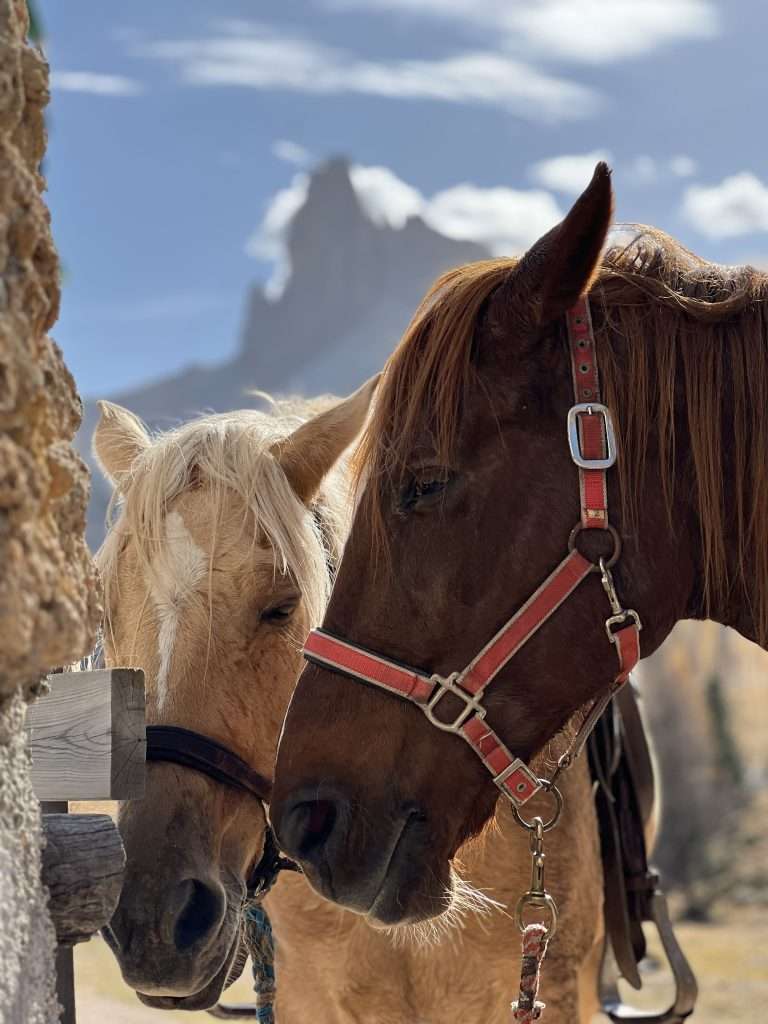
In the alpine pastures around Cortina d’Ampezzo, visitors can encounter a fascinating variety of animals grazing freely. Cows are the most common, but you may also see sheep, goats, donkeys, pigs, and horses. These mountain pastures are home to many animals, each with its own habits and needs. Some animals are more sociable, staying close to one another and sometimes even approaching hikers out of curiosity. Others prefer quieter surroundings and tend to keep their distance, enjoying the peaceful rhythm of mountain life.
These animals play an important role in preserving both the natural beauty and the pastoral traditions of the Dolomites. As always, it’s important to respect the environment and its inhabitants, ensuring that these landscapes remain authentic and unspoiled for generations to come.

One of the most beautiful aspects of life in the alpine pastures is experiencing the changing of the seasons so vividly.
In spring, crocuses and rhododendrons bloom, bringing the first colors back to the mountains. Summer follows with lush green meadows, where animals graze peacefully across the Dolomites. In autumn, the pastures are painted in warm shades of orange, yellow, and red — the season of the Desmonteà, the traditional celebration of transhumance, when livestock is guided back down to the valley stables. Finally, winter arrives with its pristine blanket of snow, marking the quiet “rest” of the pastures until the following spring.
Nature transforms from season to season, offering breathtaking landscapes throughout the year — a constantly changing beauty that makes every moment in the Dolomites unique.
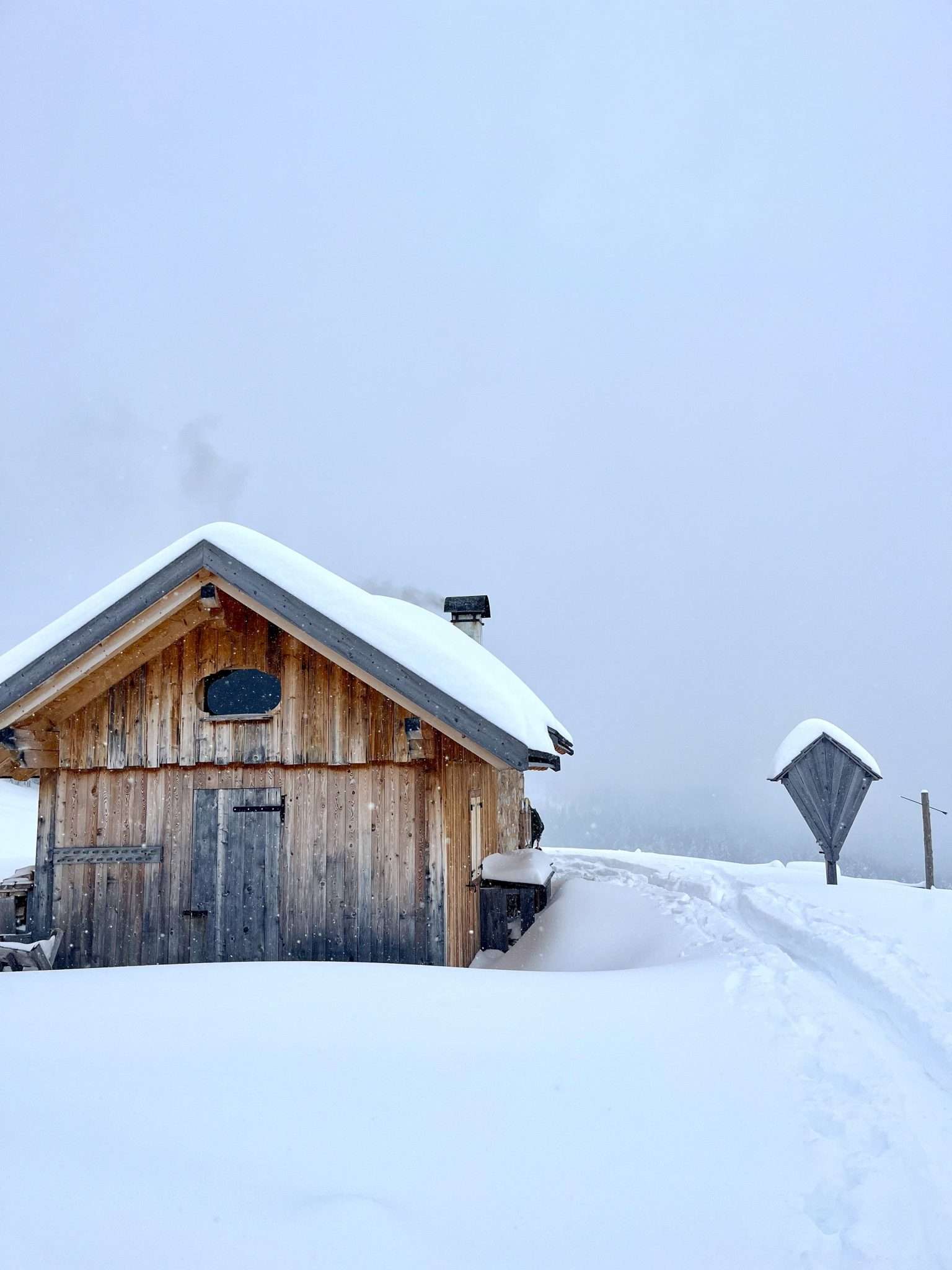
Would You Like to Experience Authentic Ladin Life?
Would you like to prepare traditional local recipes or try on the traditional Ampezzo attire?
Discover how cheese is made — from the barn to the dairy — and enjoy a tasting?
Or learn where to buy products that come directly from the Dolomites?
Contact us — we’re here to help you create an authentic experience.
Contact us, we’re here for you.
Become part of the magic of Cortina. Sign up for our newsletter today!
The adventure don’t end here. Do you follow us?
Become part of the magic of Cortina. Sign up for our newsletter today!
The adventure don’t end here. Do you follow us?